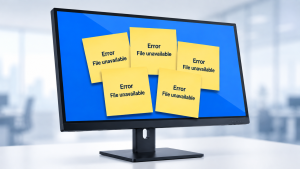
The way break-fix support is designed to operate
When you call a break-fix technician, their job is to resolve the specific issue you called them out for. They arrive, diagnose the symptom in front of them, clear the error, and move on to their next job. That is not a criticism; it is simply how the model works. They are engaged to fix what is broken, and that is what they do.
The problem is that most IT issues have a surface symptom and an underlying cause, and those are two different things. The surface symptom is what triggered the call, whereas the underlying cause is the reason it happened in the first place. A break-fix engagement is scoped to the symptom. The underlying cause rarely gets the time or attention it would need to be properly resolved, because that work was never part of the brief.
So, the technician closes the ticket, heads to their next client, and your system carries on with the same unresolved issue running underneath, and it is only a matter of time before it surfaces again.
Why this is so easy to miss
The frustrating part is that the fix feels real, because the error is gone, the system is running, and there is no obvious sign that anything is still wrong. It can take weeks or even months before the same issue reappears, and by then it is easy to assume it is just bad luck or aging equipment rather than an unresolved root cause from the last time.
This is how businesses end up paying for the same problem two, three, or four times without realising it. Each visit looks like a new incident, and each invoice looks reasonable, but the underlying issue is the same one that was never fully addressed.
What it looks like when the root cause actually gets fixed
Resolving an IT problem properly means going a level deeper than the symptom. It means understanding why the failure happened, whether the same conditions exist elsewhere in the system, and what needs to change so that it does not happen again. That work takes longer and requires a different kind of engagement than a one-off callout.
When technology is managed that way, the same problems stop repeating, and issues get caught earlier, before they cause an outage. The pattern of recurring callouts breaks, and your technology starts behaving the way it should have been all along.
If you have been dealing with the same IT issues on rotation, it is worth having a conversation about what is actually underneath them. Reach out to our team and let’s take a proper look.